“Tija maglo”
(Quiet Fog)
Serbian Traditional Folk Song
This beautiful traditional folk song from Eastern Serbia tells a poetic and rustic story of the winter fog sheltered in a shepherd’s embrace. It exemplifies a delicate, soulful expression within Serbian traditional folk songs and powerfully depicts rich anthropomorphic symbolism of the shepherd culture common to South Slavic traditions.
Especially fascinating is the amazing performance by Serbian master folk singer Светлана Стевић Вукосављевић (Svetlana Stević Vukosavljević). Her deeply inspired and expressive performance elevates this recording to a definitive and unrivaled rendition.
“Tija maglo” by Svetlana Stević Vukosavljević:
https://www.youtube.com/watch?v=BLqKMN02n0k
The video above was chosen for its idyllic landscapes, perfectly matching the song’s context.
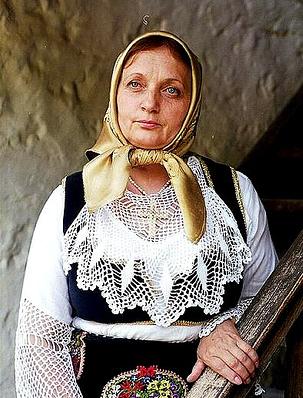
СВЕТЛАНА СТЕВИЋ ВУКОСАВЉЕВИЋ
SVETLANA STEVIĆ VUKOSAVLJEVIĆ
Master Folk Singer
(source: https://krivak.rs/svetlana-stevic-vukosavljevic/ )
Svetlana Stević Vukosavljević (born 15 February 1948 in Milatovac, Serbia) graduated from the Chemical-technological technical school in Belgrade. For over 35 years, she has been engaged in research work focused on ancestral culture within the Homolje region of Eastern Serbia. A gifted singer of traditional Serbian songs, she became a soloist with Radio Belgrade in 1976 and since then has amassed a significant opus of permanent recordings in Radio Belgrade’s sound archives. That same year, she also collaborated on several prominent programs – “Svanovnik” (the Dawn), “Od zlata jabuka” (Golden Apple), and “Riznica” (Treasury) – roles she continues to hold today. In 2009, she received a special award recognizing her superior contribution to Serbian national culture, elevating her status as a National Artist of Serbia. (adapted from the source article here)
In this recording, Svetlana’s voice – bright and strong, yet emotional and gentle – exhibits all the nuances of traditional folk singing. She masterfully connects all the emotions weaved into the lyrical content with the intricate techniques of folk singing. We can clearly hear warmth, love and sensitivity through her voice, but also a subtle sense of pride and defiance that shimmers within the first verse.
Her dynamic range on this song is remarkable, particularly with her incredibly tender diminuendos that seem to dissolve into depths of the music. Her intonation is impeccable, with the intentionally flattened second degrees (Db) of the resolving C minor scales transforming them into Phrygian Minor. The similar feature also appears in the first lines of each verse – the final resting note (tonic Eb) is enveloped by the flat seventh (Db) and the second (F) scale degrees. These flattened notes indicate that the tonal center of Eb temporarily turns from the Ionian (Major) into a Mixolydian mode. However, while the same melodic lines played on the accordion in between the vocal verses maintain the Ionian mode, the vocalist remains firmly in the Mixolydian mode at these same points, preserving the original melody’s authentic vocal form, even if it might sound slightly dissonant to the unfamiliar ear.
Svetlana’s calm, yet emotionally charged voice resonates with a tasteful vibrato – expertly controlled and unassuming – while her intricate ornamentation returns the song to its authentic roots.
She guides the musicians through the harmonic progression with subtle cues in the form of precisely defined glissandos – descending or ascending – that gently glide straight into the next chord, creating a seamless transition.
On this recording, the vocalist is supported by a folk ensemble featuring accordion, mandolin (тамбурица / tamburica) and double-bass. For those with a keen ear – the “tamburica” mandolin is picked and the double bass is bowed. Upon a closer listening, it looks to me that there are two overlapping accordions playing slightly different parts.
Song Lyrics in the Serbian Azbuka alphabet:
Тија магло
“Тија магло, где си зимовала?”
“Ај, где сам да сам, добро ми је било,
ај, где сам да сам, добро ми је било!
Зимовала у равне планине,
ај, код овчара у бела недара,
ај, код овчара у бела недара.
Сва се гора под снегом савила,
ај, овчару се ја у недра свила,
ај, беља недра, нег’ његово стадо!”
Song Lyrics transliterated in the Latin alphabet:
Tija maglo
“Tija maglo, gde si zimovala?”
“Aj, gde sam da sam, dobro mi je bilo,
aj, gde sam da sam, dobro mi je bilo!
Zimovala u ravne planine,
aj, kod ovčara u bele nedara,
aj, kod ovčara u bele nedara.
Sva se gora pod snegom savila,
aj, ovčaru se ja u nedra svila,
aj, belja nedra, neg’ njegovo stado!”
English translation:
Quiet Fog
“Quiet fog, where did you spend the winter?”
“Oh, wherever I was, it was good for me,
oh, wherever I was, it was good for me!
I spent the winter in the flat mountains,
oh, with the shepherd in his white breast,
oh, with the shepherd in his white breast.
The whole mountain bowed under the snow,
oh, and I curled up in the shepherd’s breast,
oh, his breast is whiter than his flock!”
Notes on the translation
- Tija (Тија):
A poetic, dialectal form of tiha (тиха), meaning quiet, still, or gentle. - U bela nedara / u nedra (у бела недара / у недра):
These refer to the chest or bosom, used here metaphorically to mean a warm, intimate embrace or being sheltered inside the shepherd’s heavy wool cloak. - Ravne planine (равне планине):
This literally means flat mountains, which usually refers to high, vast mountain plateaus.
Cultural background
“Tija maglo” (Quiet Fog) is a traditional Serbian lyric song (лирска народна песма) deeply rooted in the rural, pastoral heritage of Eastern and South-Eastern Serbia.
The cultural background of this song centers on several traditional Balkan folklore elements:
Pastoral Life and the Shepherd Culture
In traditional Balkan society, the shepherd (овчар) held a romanticized and vital role. Shepherds spent months isolated in the vast mountain pastures (равне планине), braving harsh elements to protect their livestock. In folklore, the shepherd’s heavy, white wool cloak (гуњ or кабаница) represents the ultimate shield against winter. The song cleverly plays on this imagery, equating the warmth of his white cloak or chest to a protective haven so inviting that even nature itself seeks shelter there.
Anthropomorphism in Slavic Folklore
A hallmark of South Slavic oral tradition is anthropomorphism – giving human qualities, emotions, and speech to natural phenomena.
- The Dialogue: The song is structured as a conversation between a human speaker and the fog itself.
- Nature as a Character: Instead of being portrayed as cold, eerie, or dangerous, the winter fog is personified as a gentle, tired traveler seeking a cozy place to hibernate.
Subdued Eroticism and Symbolism
While on the surface it is a simple song about nature, traditional lyric songs often hide subtle romantic or erotic themes under the guise of pastoral imagery:
- The Bosom (Недра / Nedra): The repetition of nedra (breast/bosom/embrace) introduces a sense of intimacy and warmth.
- The Color White: The song contrasts the white snow, the white sheep, and the shepherd’s “white breast.” In Serbian folk poetry, “white” is a major aesthetic ideal denoting beauty, purity, and health. By declaring that the shepherd’s embrace is “whiter than his flock,” the lyric elevates human warmth and love above the entirety of nature.
Musical Style
Musically, this song belongs to the изворне песме / izvorne pesme (source or traditional roots music) genre. It is traditionally sung using specific ancient vocal techniques native to the Balkan mountains – often characterized by long, melismatic drone notes and rich vocal ornamentation. It is frequently performed alongside traditional instruments like the kaval (an open-ended mountain flute) or the frula (a shepherd’s whistle flute), echoing the wind and mist of the mountains.
A Note on the Song Title
Traditional folk song titles are commonly comprised of the opening lines or few first words of the lyrics, and this song is not an exception. Virtually all of the folk songs I’ve arranged for piano on my music albums so far follow this rule:
– Ajde Jano
– Gusta mi magla padnala
– In the green garden (U zelenom sadu)
– Na srce mi lezi, mila mamo
– Sto mi je merak poljak da bidnem
– Oj golube, moj golube
– Navali se Shar-planina
– Karanfil se na put sprema
What is particularly fascinating about this song is that its title perfectly encapsulates the setting and its core elements: the scenery, mood, feelings, and hints at anthropomorphic symbolism. The single word ‘Quiet’ (Тија) achieves this brilliantly. Considering the many possible descriptions of fog – soft, thin, light, morning, dense, heavy etc. – choosing ‘quiet’ is ingenious; it vividly portrays the atmosphere and encompasses all its aspects within the context. This instantly transforms the ‘fog’ from an inanimate object into a central, living subject, evoking a serene landscape of misty fields and lush green hills, bathed in soft fog – creating a gentle, soothing mood and a relaxed pace that feels warm with love.
– – –
As a final observation, it is absolutely incredible how many allusions, symbolic meanings and emotions have been condensed in just three short verses – a testament to the exceptional ingenuity of folk art.
At last, one question remains unanswered: To whom is the Fog replying?
Is it the Mother Nature?
The flat Mountain?
Or some other mysterious character?
I will leave you to draw your own conclusion.
“Tija maglo” by Svetlana Stević Vukosavljević:
https://www.youtube.com/watch?v=BLqKMN02n0k
* * * * * * * * * * * * * * * * * * * * * * * *
If you enjoyed this essay please show your support and Subscribe to my YouTube Channel, follow my FaceBook Page or visit my Online Store for music downloads, CDs albums, sheet music and more. Thank you!
Copyright 2026 Koshanin. All rights reserved. Any copying, reproduction, or use, in part or full, without prior consent of the author is prohibited.